PCR Primers and Probes
We synthesize high-quality custom Primers and Probes designed for precise PCR amplification and reliable detection
in research and molecular workflows.
From synthesis to quality control, our focus is simple: consistent performance, clean fluorescence signals, and results laboratories can trust.
What Are PCR Primers and Probes?
PCR primers and probes are short synthetic oligonucleotides used to amplify and detect specific DNA or RNA sequences during polymerase chain reaction (PCR).
- Primers bind to the target sequence and initiate DNA synthesis.
- Probes carry fluorescent labels and enable sequence-specific detection during amplification.
They are essential components of:
- Real-time PCR (qPCR), Digital PCR (dPCR)
- SNP genotyping, gene expression analysis, pathogen detection
In short: Primers amplify. Probes emit a signal. Together, they turn sequence information into measurable results.
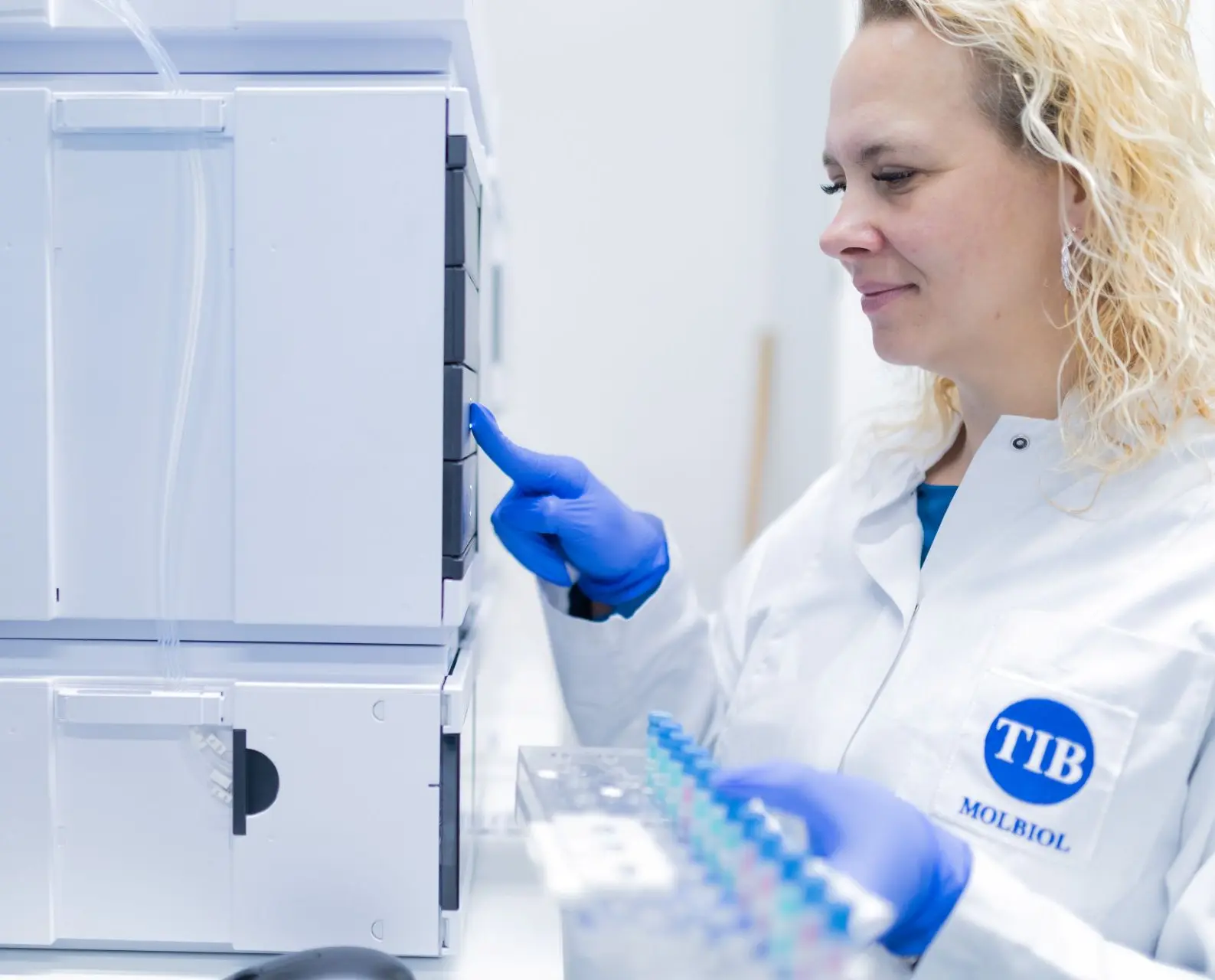

Our PCR Primers
for Real-Time and Digital PCR
Since 1990, we have provided custom oligonucleotide synthesis to laboratories worldwide.
Our PCR Primers are manufactured for high specificity, reproducibility, and reliable performance in real-time PCR (qPCR) and digital PCR (dPCR) applications.
They support assay development, research applications, and routine molecular workflows where precision and consistency are critical.
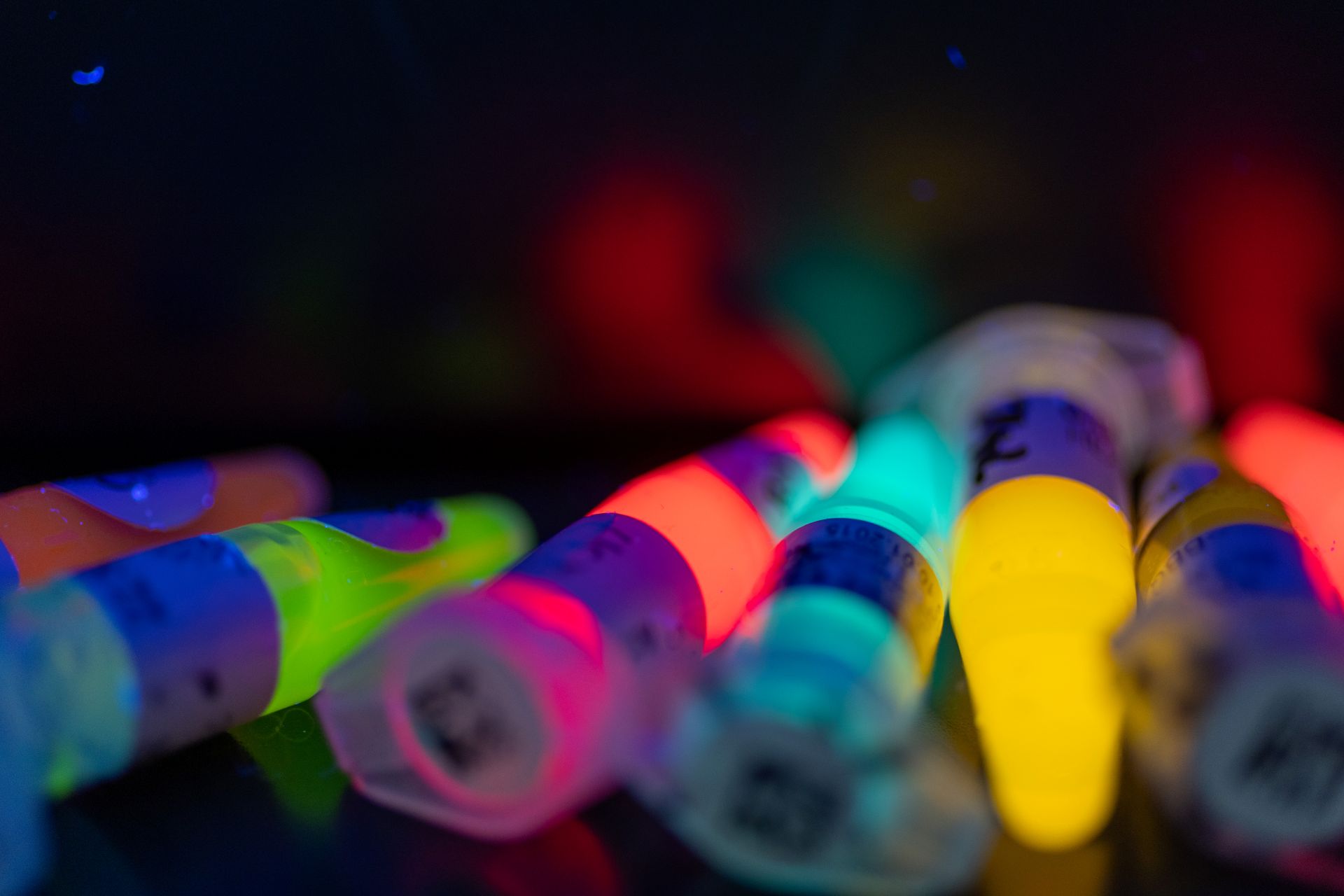
Our PCR Probes
for qPCR, dPCR, SNP Detection
We provide the synthesis of hydrolysis probes (TaqMan™), hybridization probes (LightCycler®), and single-labeled probes (SimpleProbes®), covering quantitative detection and SNP genotyping applications.
Probe synthesis is available in production scales ranging from 1 to 500 nmol.
TaqMan™ probes are hydrolysis probes labeled with a fluorophore and quencher.
During amplification, probe cleavage separates the reporter dye from the quencher, generating a measurable fluorescence signal.
Key features:
- High specificity and sensitivity
- Quantitative detection in real-time PCR
- Suitable for gene expression analysis and pathogen detection
- Broad compatibility across major qPCR platforms
- Flexible dye-quencher combinations for multiplex assay design*
LightCycler® hybridization probes use a dual-probe FRET system consisting of a donor and acceptor fluorophore.
Upon hybridization to adjacent target sequences, energy transfer occurs, enabling highly specific fluorescence detection.
Advantages:
- High specificity and sensitivity
- High flexibility in assay design
- Suitable for genotyping and quantification
- Optimized for Roche LightCycler® systems
- Available with standard 3'-fluorescein and 5'-LightCycler® Red labeling (and inverted)
SimpleProbes® are single-labeled hybridization probes that increase fluorescence upon binding to their complementary target sequence.
Variant discrimination is achieved through melting curve analysis, where sequence mismatches produce distinct melting temperatures (Tm).
They are particularly powerful for:
- SNP genotyping
- Human polymorphism detection
- Differentiation of variants by distinct melting temperatures
For ready-to-use SNP genotyping assays, explore our LightSNiP® kits.
*Available Fluorophores and Quenchers:
We offer a broad range of fluorophores and quenchers compatible with common qPCR instruments and multiplex assay designs. Available dye options include 6FAM™, Coumarin, TET™, HEX™, YAK, Cy3®, Cy5®, and Cy5.5®, combined with compatible quenchers such as TAMRA™, DB, BBQ, BHQ®-1, and BHQ®-2 depending on probe format and assay requirement.
We will be happy to assist you in finding a suitable solution for you. Contact us!
Need advanced performance out of your probes?
Scroll down to explore our Advanced Oligonucleotide Modifications for PCR Primers and Probes — sometimes chemistry makes all the difference.

Advanced Oligonucleotide
Modifications for
PCR Primers and Probes
What Are Oligonucleotide Modifications?
Oligonucleotide modifications are chemical alterations added to PCR primers or probes to improve binding affinity, specificity, stability, or signal performance.
In real-time PCR and SNP genotyping, modifications such as Minor Groove Binders (MGB) or Locked Nucleic Acid (LNA) bases can significantly enhance assay sensitivity and variant discrimination.
Platform Compatibility
As a Roche Group company based in Berlin, we combine local precision in oligonucleotide synthesis with global quality standards. Trusted by labs. Powered by Roche.
Our oligonucleotides are compatible with: